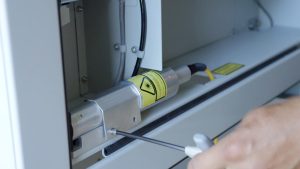
Bien que presque tous les matériaux que vous introduisez dans votre système de gravure contiennent et/ou libèrent des résidus ou des débris, la plupart des matériaux peuvent généralement être utilisés sans danger dans votre système. Cependant, certains matériaux ne sont pas adaptés à la gravure et à la découpe au laser. Ces matériaux peuvent corroder l'intérieur de votre machine, ce qui réduit ses performances et annule votre garantie. La sécurité des matériaux est une étape essentielle pour prolonger la durée de vie de votre système laser.
Le chlorure d'hydrogène et le chlorure de vinyle (principalement présents dans le PVC et d'autres matériaux synthétiques) sont dangereux pour la durée de vie de votre système laser. La gravure et la découpe de ces matériaux peuvent causer des dommages irréversibles à votre machine. Il est donc extrêmement important de déterminer les composants de vos matériaux de découpe et de gravure. Mais comment déterminer la composition du matériau que vous souhaitez découper ou graver au laser ? Poursuivez votre lecture pour le découvrir.
Material Safety Data Sheet
A Material Safety Data Sheet (MSDS) is designed to provide you the proper procedures for handling or working with a particular substance. These documents contain the elements used to make up the material and will indicate whether or not it contains elements that are potentially harmful to your engraving system. MSDS’s also include information such as physical data (melting point, boiling point, flash point etc.), toxicity, health effects, first aid, reactivity, storage, disposal, protective equipment, and spill/leak procedures.
Obtaining a MSDS
There are several ways to obtain a MSDS for the material sheet. The easiest way is to perform an Internet search with the key words “MSDS” and whatever material you’re working with (example: MSDS + Neoprene.)
Si vous ne trouvez pas les informations que vous recherchez à l'aide de cette méthode, contactez directement le fabricant pour obtenir une fiche de données de sécurité (FDS) sur le matériau en question.
Sample MSDS
Below are some sample safety data sheets for various products.
Neoprene – Notice that under hazardous combustion products, the MSDS indicates hydrogen chloride is emitted when the material is heated.
Polyester – there is no mention of toxic or questionable elements in this material so it appears safe to laser cut and/or engrave.
What happens if you engrave or cut something containing hydrogen or vinyl chloride?
If you don’t know what’s in the material you’re engraving or cutting, you may have unintentionally cut or engraved items containing polyvinyl chloride. Performing this once or twice will likely not drastically damage your machine; however, continued engraving or cutting of this material will corrode the inside of your machine.
A more important consideration are the potentially hazardous fumes that might be released from processing these materials. Some materials are quite toxic when burned and the damage to your health is much more important than the minor damage you might do to your machine.
Material Safety Data Sheets are an invaluable resource for laser engravers. To protect your health and the life of your machine, always obtain a MSDS for materials about which you are uncertain.